Forecast performance, assess valuation, and analyze the strategic drivers of business success. Learn on your schedule with 90 days of full access starting the day you enroll.
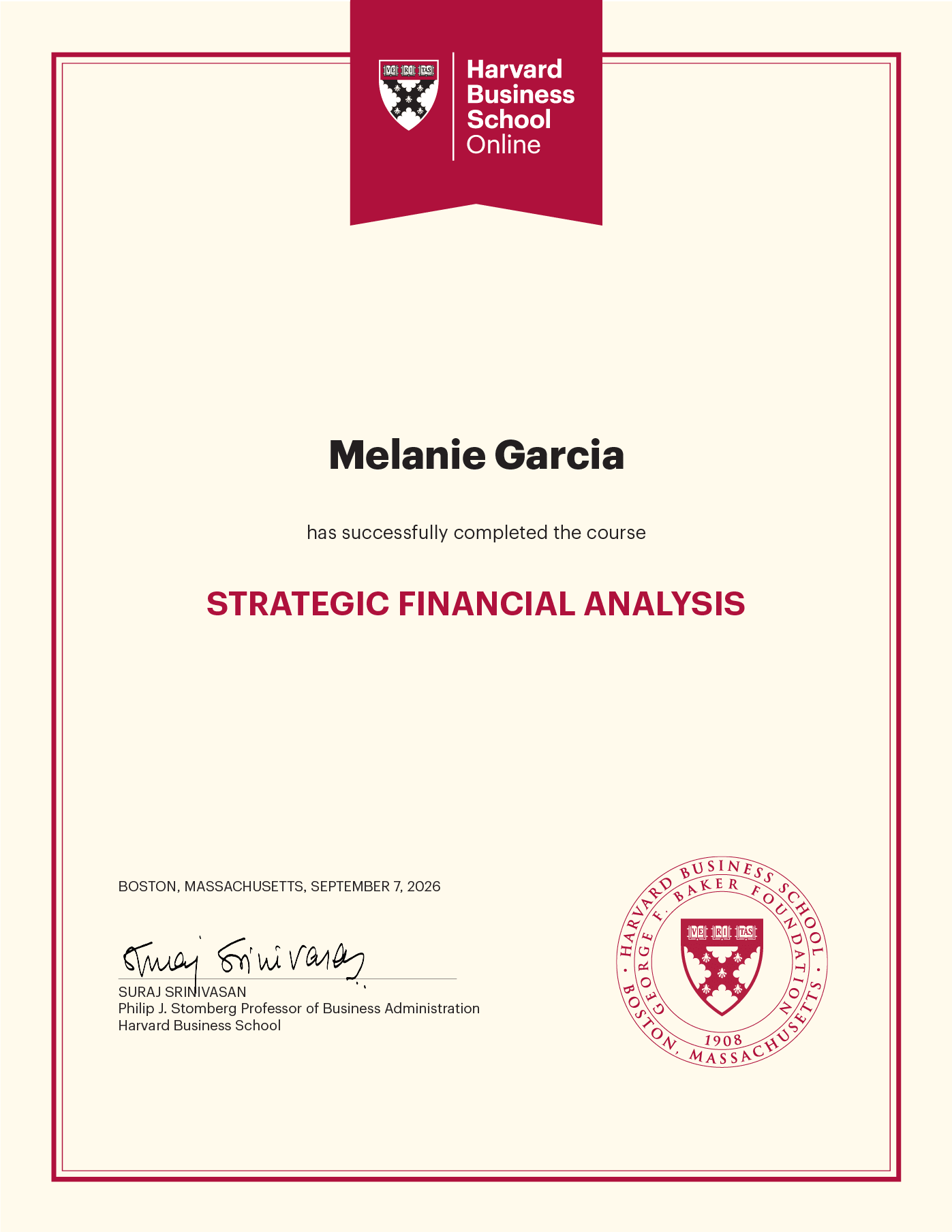
Certificate of Completion Boost your resume with a Certificate of Completion from HBS Online Earn by completing this course in 90 days starting the day you enroll
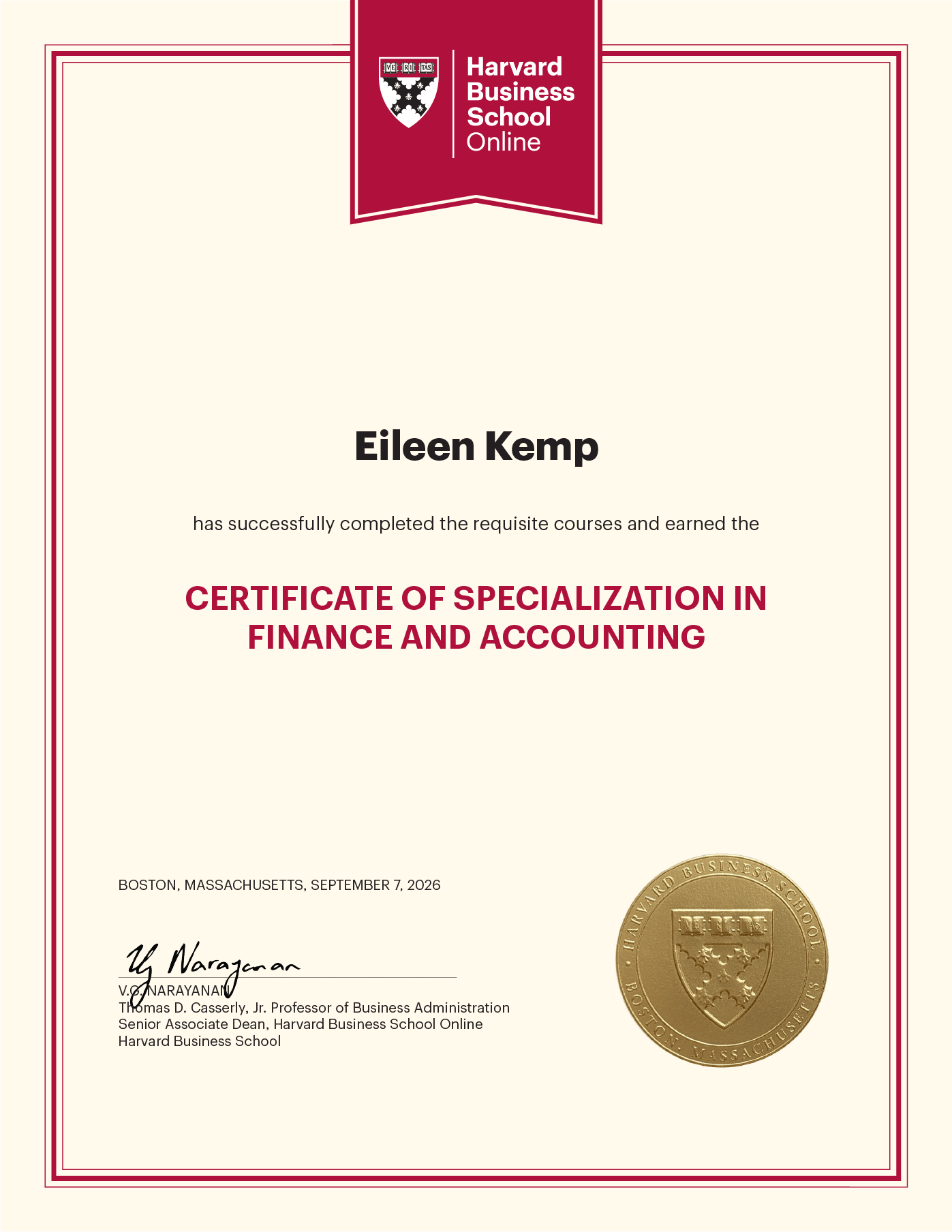
Certificate of Specialization Prove your mastery of finance and accounting Earn by: completing any three courses within this subject area to earn a Certificate of Specialization
This is an intermediate-level course that requires participants to have a preliminary understanding of finance and accounting as well as access to and experience with Microsoft Excel.
Module 1
Identifying Strategic Drivers of Performance
6-7 Hours
Explain the relationship between strategy and financial reporting and analyze how accounting captures an organization's strategic decisions.
PlayVideo duration:0:46
The Role of Capital Markets
PlayVideo duration:0:31
Strategy’s Impact on Financials
Concepts
Introduction to Strategic Financial Analysis
Mapping Strategy into Financial Statements Using Netflix
Featured Exercise
Map the connections between strategic decisions and impacts on financial metrics, including amortization changes and capital investments
Module 2
Assessing Strategy Execution
8-10 Hours
Use financial ratio analysis to identify corporate profitability drivers and benchmark company performance.
Highlights
PlayVideo duration:0:27
Financial Statement Analysis
PlayVideo duration:0:38
Assessing Company Performance
Concepts
Introduction to Assessing Strategy Execution
Drivers of Profitability: Traditional DuPont
Drivers of Profitability: Modified DuPont
Reflecting Anticipated Strategic Changes in Financial Statements
Featured Exercise
Conduct ratio analysis to compare performance across multiple companies
Module 3
Introduction to Forecasting
6-8 Hours
Formulate the forecasting process into distinct steps and forecast corporate performance from condensed balance sheets.
Highlights
PlayVideo duration:0:23
Forecasting Assumptions
PlayVideo duration:0:36
Forecasting Sales Growth
Concepts
Role of Forecasts
Forecasting Company Performances
Conducting Financial Statement Forecasts
Featured Exercise
Perform a step-by-step financial statement forecast using modified DuPont ratios
Module 4
Valuation
8-10 Hours
Assess the pros and cons of different valuation methods, examine how to apply them in investing, and apply valuation theory and techniques to publicly traded companies’ valuations.
Highlights
PlayVideo duration:0:24
Determining Value
PlayVideo duration:0:27
Value Creation
Concepts
Introduction to Business Valuation
Mechanics of Valuation: Part I
Mechanics of Valuation: Part II
Analysis of Valuation
Featured Exercises
Conduct valuation exercises using different methods, including abnormal earnings and discounted cash flow
Use estimated valuation to determine an optimal investment strategy
Module 5
Mergers and Acquisitions
6-8 Hours
Identify potential synergies created by mergers and acquisitions (M&A) and multi-unit businesses, analyze the strategic value of potential M&A opportunities, and understand how to apply valuation in the M&A process.
Highlights
PlayVideo duration:0:22
Creating Synergies
PlayVideo duration:0:26
Acquisition Premiums
Concepts
Introduction to Mergers and Acquisitions
Pursuing a Mergers and Acquisition Strategy
Valuing a Target
Closing the Deal
Featured Exercises
Value synergies in an M&A scenario
Perform a standalone valuation analysis and a valuation analysis with synergies
Module 6
Applying Strategic Financial Analysis and Valuation
4-6 Hours
Explore the motivations behind and value created by business transformations and spinoffs, identify spinoff strategies, and gain insights into managing chief executive officer and chief financial officer relationships with investors and the financial community.
Highlights
PlayVideo duration:0:41
Analyzing a Business Portfolio
PlayVideo duration:0:31
Managing Spinoff Risk
Concepts
Business Transformation Through Divestiture
Transformation’s Impact on Market Perception
What’s in the Price?
Featured Exercises
Conduct a sum-of-the-parts analysis to understand a business spinoff’s viability
Analyze the assumptions that justify changes to a company’s share price
Led by World-Renowned HBS Faculty
HBS Online courses are taught by Harvard Business School faculty, bringing the renowned HBS classroom experience directly to you.
Philip J. Stomberg Professor of Business Administration, Chair, MBA Elective Curriculum
Experience
Immersive Learning
Stay active by engaging in a new activity every three to five minutes, including opportunities to complete company performance assessments and forecasting and valuation exercises.
PlayVideo duration:0:06
Explore key accounting concepts and prinicples to unlock critical insights into business performance and potential.
Real-World Connections
Get social by collaborating and networking with a global community of peers before, during, and after the course. Learners who successfully complete an HBS Online program are added to the HBS Online Community's Official Networking Group and gain exclusive access to events and other networking opportunities.
PlayVideo duration:0:08
See how the HBS Online course platform engages you in social learning. You exchange ideas, offer input, and seek out viewpoints from a community of learners gathered from around the globe. In the process, you learn from each other’s experiences and perspectives, and leave the program with a broader outlook on the world.
Real-World Cases
Immerse yourself in real-world, case-based examples brought to life by successful business leaders at organizations like Netflix, Intel, and BWX Technologies.
PlayVideo duration:0:11
Our courses allow you to apply your learning through real-world examples and experience Harvard Business School’s signature case method. You’ll leverage course concepts, vital tools and frameworks, and the diversity of your peers’ perspectives to analyze the problem and determine a path forward.
PlayVideo duration:0:06
Explore key accounting concepts and prinicples to unlock critical insights into business performance and potential.
Taking classes from Harvard Business School Online, you don't just learn the frameworks, you live them.
Asiye Cerkezoglu
Financial Planning & Analysis, Management Reporting Vice President, Fiba Faktoring
Strategic Financial Analysis FAQs
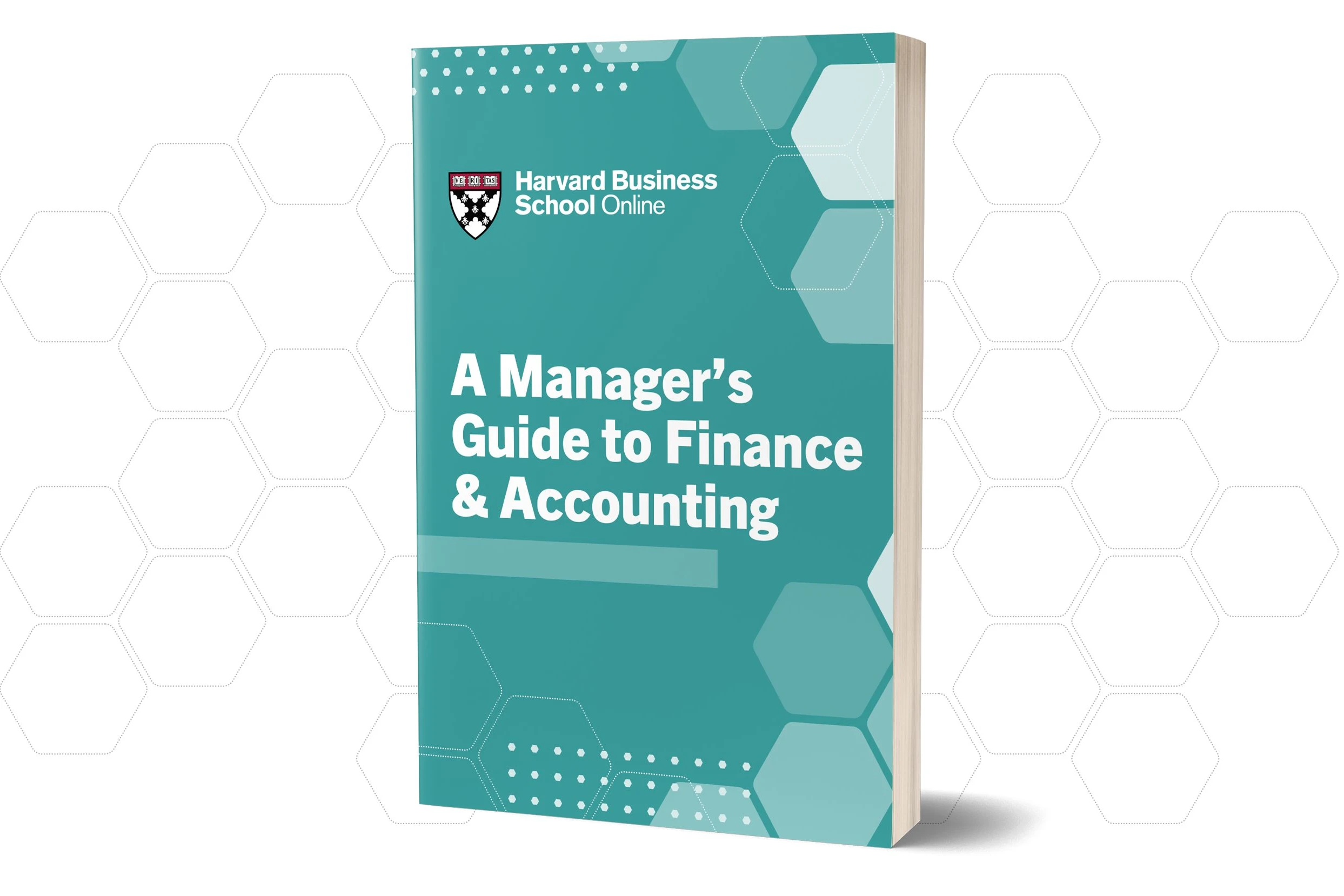
Free E-Book
A Manager's Guide to Finance & Accounting
Learn about the difference between finance and accounting, the financial skills all managers need, and how taking an online course can help you achieve your educational goals and accelerate your career.
Bring HBS Online’s flexible, scalable, and high-impact learning experiences to your organization through shared learning and group discounts for teams of five or more.