
If your business sells physical goods to customers, it’s essential to track and manage your inventory effectively.
From an accounting perspective, inventory isn’t just “stuff.” It’s an asset and critical line item on your company’s balance sheet. It also affects the income statement through cost of goods sold (COGS).
According to Harvard Business School Professor V.G. Narayanan in the online course Financial Accounting—which can be taken individually or as part of the multi-course Core Business Essentials program—inventory accounting requires businesses to determine how much inventory was sold during an accounting period and how much remains on hand.
“At the beginning of an accounting period, a business typically has inventory left over from the previous period,” Narayanan says in Financial Accounting. “During the current period, the business will purchase more inventory. These two amounts make up the goods available for sale for the period. This total amount is ultimately allocated between ending inventory, which remains on the balance sheet, and the cost of goods sold, which is expensed on the income statement.”
Two common methods businesses use to track inventory are perpetual and periodic inventory systems.
This guide explains how each system works, their key differences, and their potential benefits and drawbacks. It also offers practical considerations for choosing the right system for your business.
Featured Certificate Course
Financial Accounting
Learn how financial statements are built, interpreted, and used to assess business performance.
Start Anytime | 5 Modules | 8-9 Hours per Module | $1,949
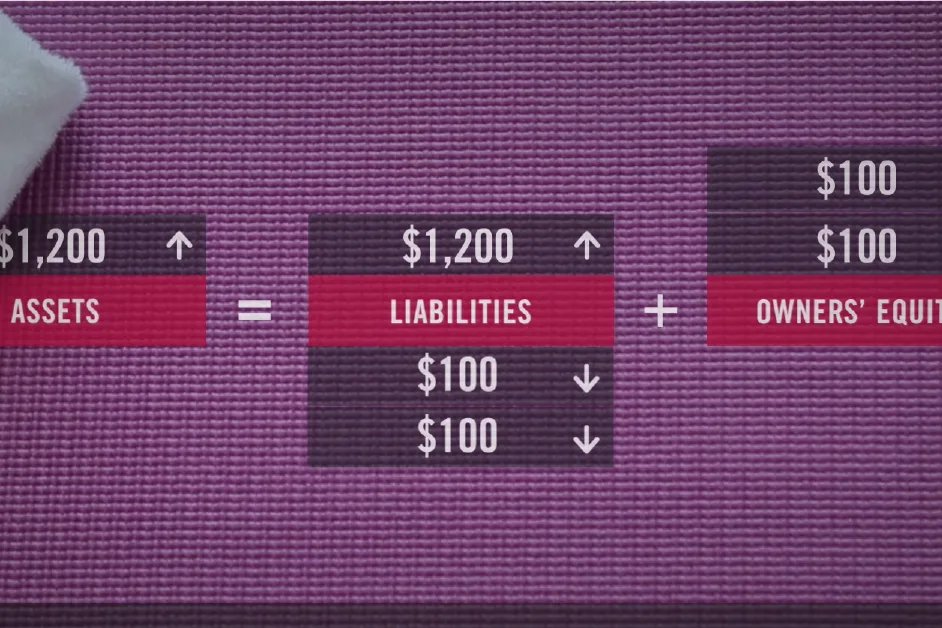
What Is a Perpetual Inventory System?
A perpetual inventory system continuously updates a business’s inventory records as products are purchased and sold.
Perpetual inventory typically relies on a computerized system. Here’s an example of how it works:
In a warehouse, products may be labeled with barcodes or RFID tags that scanners read and sync with inventory management software. Together, these technologies track products as they move throughout the warehouse, between stores, or, in the case of a direct-to-consumer business, to customers.
For brick-and-mortar retailers, barcodes and scanners can feed into a point-of-sale (POS) system that logs each sale and automatically updates inventory levels as sales and returns are completed.
In addition to providing retailers with up-to-date insight into inventory levels, perpetual inventory systems affect how a business accounts for inventory in its general ledger and financial statements.
According to Narayanan in Financial Accounting, under a perpetual inventory system, “when inventory is sold or shipped to a customer, [the business] reduces the inventory balance with a credit and increases the cost of goods sold with a debit.”
In other words, each sale reduces the amount of inventory recorded as an asset and recognizes the cost of that inventory as an expense.
What Is a Periodic Inventory System?
A periodic inventory system updates inventory records at set intervals rather than after every transaction. Under this system, a business conducts a physical inventory count—for example, weekly, monthly, or quarterly—and uses the result to calculate its ending inventory and cost of goods sold.
“Under [a periodic inventory] system, the business only periodically records cost of goods sold by physically counting actual inventory on hand and backing into the amount that must have been sold,” Narayanan says in Financial Accounting.
Narayanan provides an example in Financial Accounting to illustrate: Consider a business with $100 of inventory on hand at the beginning of the period. During the period, it purchases another $200 of inventory. At the end of the period, the company performs an inventory count showing it has $125 worth of inventory remaining.
With $300 of goods available for sale and $125 remaining, the business calculates $175 in cost of goods sold.
“[In this case] it would record $175 as the cost of goods sold by debiting the cost of goods sold account and crediting the inventory account,” Narayanan says in Financial Accounting.
Inventory and Adjusting Journal Entries
Until it’s sold, inventory is recorded as a current asset on a company's balance sheet, with its recorded amount initially reflecting the cost incurred to acquire the inventory and prepare it for sale. Like other assets on the balance sheet, inventory may occasionally need to be adjusted.
Under a periodic inventory system, inventory is physically counted at set intervals. Counting or recording errors can affect the results, requiring the business to correct its inventory records.
A perpetual inventory system, by comparison, continuously updates inventory records as transactions occur. Even so, discrepancies can arise from human error, theft, and other forms of shrinkage that aren’t captured by typical transactions.
“Businesses that use a perpetual system will still occasionally perform physical inventory counts,” Narayanan says in Financial Accounting. “These counts will help correct misstatements that arise due to events such as shoplifting, recording errors, or spoiled or damaged goods.”
When a company finds a discrepancy between its inventory records and the physical count, it’ll typically correct the difference with an adjusting journal entry—an update to its general ledger that brings the affected account balances in line with the adjustment.
“If the perpetual inventory system shows that $1,000 of inventory is on hand, but the physical count only reveals $800 of inventory on hand, an entry would be made to recognize an expense for the missing inventory,” Narayanan says in Financial Accounting.
Choosing the Right Inventory System for Your Business
Both perpetual and periodic inventory systems offer advantages and disadvantages to consider when deciding which to use for your business.
Pros and Cons of Perpetual Inventory Systems
The primary accounting benefit of a perpetual inventory system is that it provides up-to-date insight into your inventory levels and cost of goods sold. Because businesses don't rely on physical counts to continuously update their inventory records, they can also dedicate fewer resources to routine counting.
This ongoing tracking can give management greater insight into what’s selling and what isn’t, which can inform sales, marketing, and procurement strategies.
However, perpetual inventory systems can require a significant upfront investment in the technology and software they rely on. They also aren’t guaranteed to be accurate; human error, spoilage, theft, and other forms of shrinkage must still be accounted for through occasional physical counts. Finally, system outages can disrupt operations in ways that businesses using periodic systems may not experience.
Pros and Cons of Periodic Inventory Systems
The main advantage of a periodic inventory system is that it can be less expensive to implement because it doesn't require the technology needed to continuously track inventory. As a result, a periodic system can be easy to deploy and relatively simple to manage on a small scale.
That simplicity comes with tradeoffs, however. Periodic systems lack up-to-date insights into inventory levels, which can make it more difficult for management to assess product performance and restocking needs. Manual inventory counts can also be slow, costly, and prone to error, especially for large companies with many product lines.
Free Brochure
Core Business Essentials
Build fluency in the language of business and gain the confidence to make an immediate impact on your career and organization.
Build a Foundation in Business Accounting
Knowing the difference between perpetual and periodic inventory systems is just one part of understanding business accounting. For companies that carry inventory, accurately preparing financial statements also requires familiarity with inventory costing methods, including first-in, first-out (FIFO), last-in, first-out (LIFO), and weighted average. It’s also important to understand key accounting calculations, such as how to determine cost of goods sold.
Developing those skills requires a strong grasp of accounting fundamentals. An online course like Financial Accounting can help you learn these and other critical accounting concepts. Completing it as part of the multi-course Core Business Essentials program can also provide context for how accounting connects with business analytics and strategy.
Are you interested in strengthening your financial understanding? Explore Financial Accounting, which can be taken individually or as part of our online Core Business Essentials credential program. To learn more about Core Business Essentials, download our free brochure today.