
Being a digital marketer involves rapid decision-making. With constantly evolving online platforms and channels, especially in the AI era, you must ensure you’re up to date on market trends and consumer behaviors.
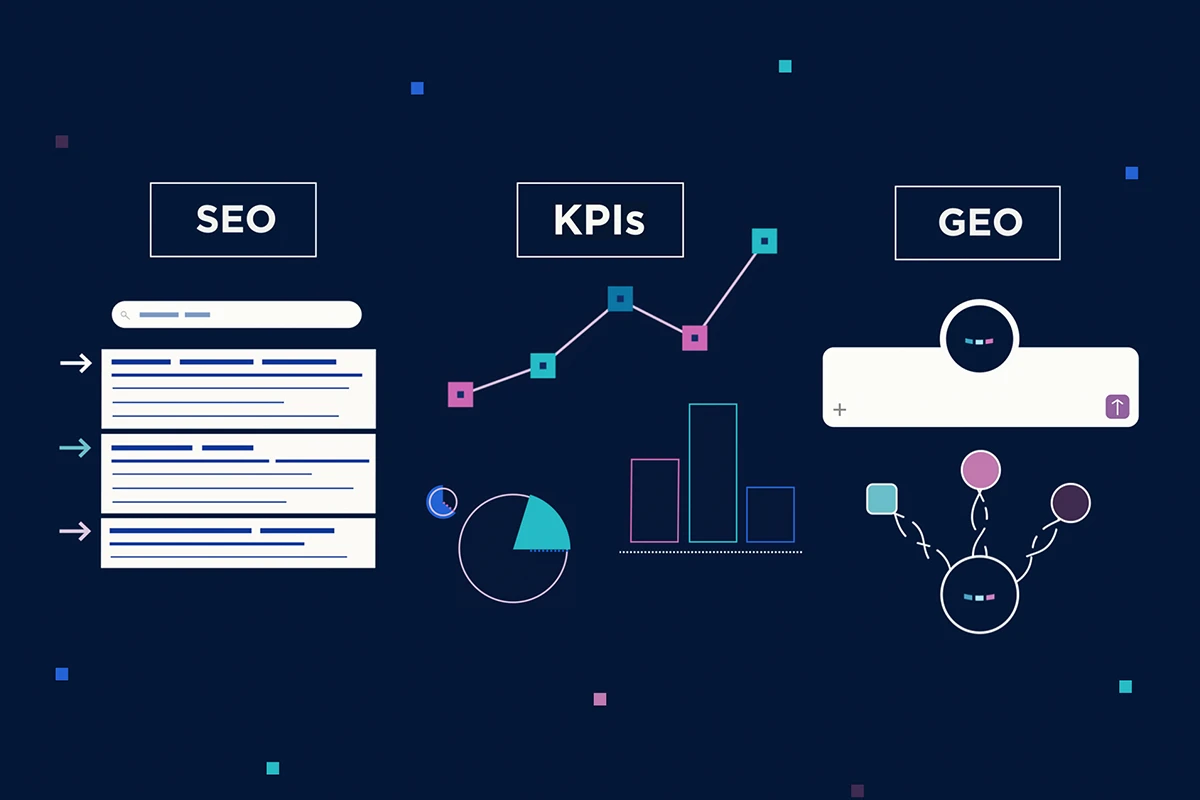
Analyzing your efforts and prioritizing the right data requires focusing on key performance indicators (KPIs)—quantifiable measures for evaluating whether you meet your marketing objectives.
While often used interchangeably, KPIs and metrics aren't the same. A metric is any data point you can track, such as page views or email opens. A KPI is a metric tied directly to a business objective. Every KPI is a metric, but not every metric is a KPI.
Here’s a breakdown of why identifying KPIs is vital to your digital marketing plan, along with common KPIs you can use and how to measure them.
Featured Certificate Course
Digital Marketing Strategy and AI
Develop digital marketing strategies that combine proven marketing frameworks with AI to acquire, engage, and retain customers—and deliver measurable business results.
Start Anytime | 6 Modules | 5-7 Hours per Module | $1,949
Why Are KPIs Important to Your Marketing Plan?
KPIs are crucial to your digital marketing plan because they reflect your strategy’s effectiveness. By setting clear, quantifiable KPIs, you can evaluate progress toward specific marketing objectives.
Despite their importance, measuring marketing performance remains a challenge. In an EMARKETER and TransUnion survey, 54 percent of marketers reported no change in their confidence in measurement year over year, while 14 percent said it declined.
“It isn’t enough to measure the final outcome alone,” says Harvard Business School Professor Sunil Gupta, who teaches the online course Digital Marketing Strategy and AI. “You also need to track intermediate metrics to understand where consumers might be getting stuck—essentially bottlenecks in the marketing funnel.”
The term “marketing funnel” refers to the three customer journey stages:
Awareness: Introducing potential customers to your brand or product to address a problem they may have
Consideration: Making customers aware of your brand or product while they evaluate it against alternatives
Decision: Influencing consumers’ purchasing decisions using the information you gather during the previous stages
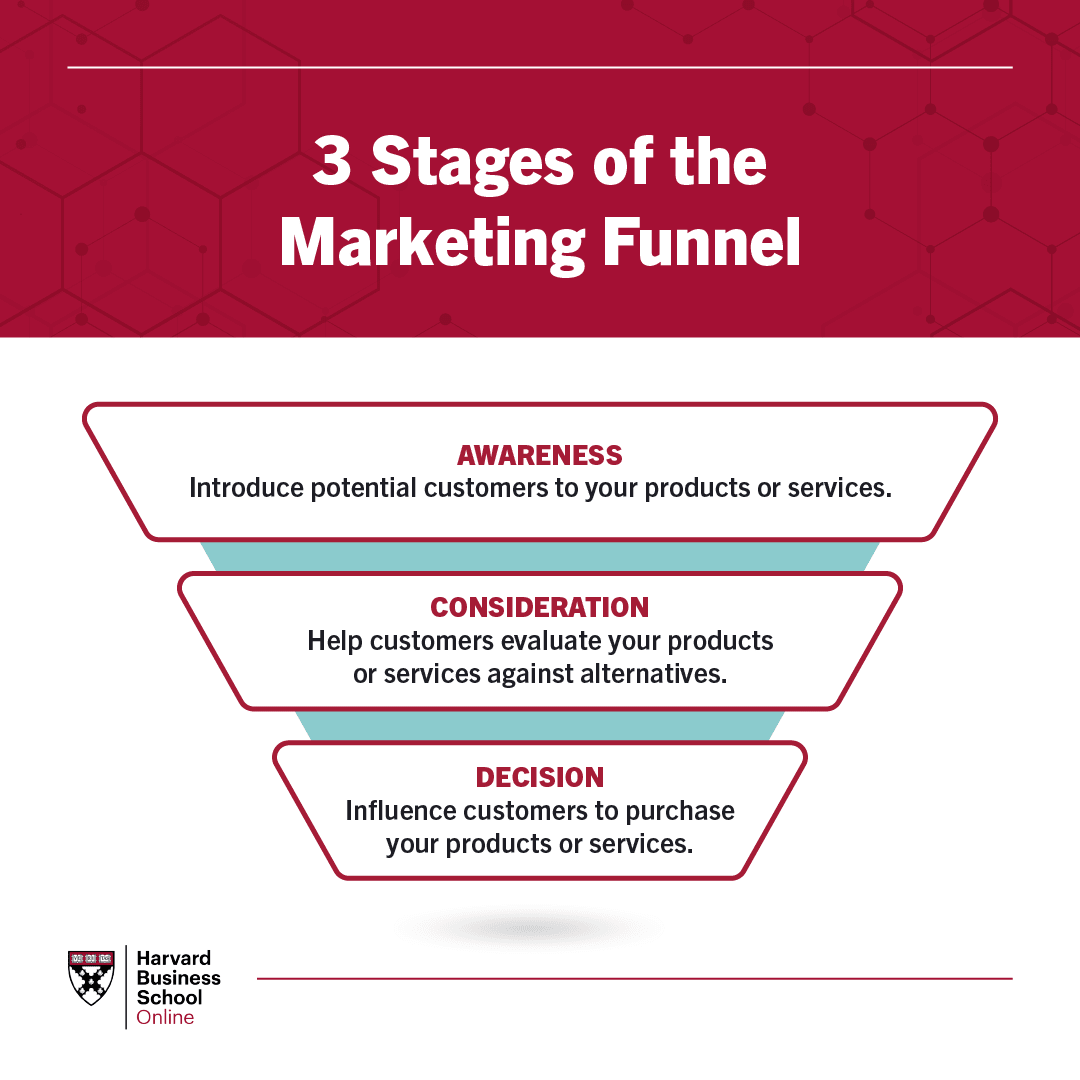
KPIs are pivotal to evaluating your success at each stage.
During the awareness stage, marketing KPIs—such as website traffic and impressions—help you understand how to attract potential customers.
For the consideration stage, metrics such as time spent on your website, pages viewed per visit, and social media interactions become more relevant and reflect how well you connect with your target audience.
In the decision stage, your main focus should be KPIs like conversion rate and sales revenue. Those reveal how well your marketing strategy drives tangible results, such as sales or leads.
By continuously monitoring and analyzing KPIs, you can measure your marketing effectiveness, make data-driven decisions to optimize your strategy, and achieve more successful outcomes.
How to Choose the Right Marketing KPIs
To choose the right marketing KPIs, start with your business objectives and work backward.
Define your goal: Make it specific and measurable, such as increasing qualified leads by 20 percent this year.
Consider the marketing funnel: Identify which stages are most relevant to your goals and select KPIs that reveal how customers move through them.
Prioritize actionable KPIs: Focus on measures that can inform your marketing decisions and reveal opportunities for improvement.
Set a baseline and target: Use historical data and relevant industry benchmarks to define what success looks like.
Here are seven KPIs for measuring your digital marketing plan’s success.
7 Marketing KPIs to Help You Measure Success
1. Impressions
Impressions are the number of times your ad or organic content is displayed or viewed—regardless of whether it garners clicks. While this KPI doesn’t reflect how many customers engage with your content, it helps boost brand awareness.
It’s often used interchangeably with “reach,” but it’s crucial to understand the difference between the two. Impressions track the number of times users see your content—and include multiple views by the same individuals—while reach only considers the number of users who see your content.
To measure your brand’s impressions, you can use Google Ads or social media platforms’ analytics tools to track and report how frequently your content appears to users. By analyzing impressions data, you can gauge your targeting strategy’s effectiveness in the awareness stage and adjust it accordingly to maximize exposure.
2. Search Engine Rankings and AI Visibility
For many businesses, customers begin their purchasing journey online.
Ranking prominently on organic search engine results pages (SERPs) can increase your brand’s visibility among potential customers, particularly during the awareness stage.
As AI reshapes online search, however, marketers must also consider how their brands appear in AI-generated answers. For example, Google’s AI overviews often appear above traditional search results, reducing traffic to websites. According to marketing platform Ahrefs, an AI Overview correlates with a 58 percent lower click-through rate for the top-ranking page.
Tools like Google Analytics, Google Search Console, and specialized search engine optimization (SEO) and AI visibility platforms can provide valuable data for tracking performance. Key metrics include:
Number of target keywords ranking in search results
Volume of organic search traffic
Referral traffic from AI assistants
Brand mentions and citations in AI-generated answers, such as Google’s AI Overviews and ChatGPT
Share of AI-generated mentions compared with competitors
Number of backlinks
Monitoring these metrics can help you evaluate your SEO and content strategy’s performance, identify areas for improvement, and adjust your approach to reach your target audience.
3. Click-Through Rate (CTR)
Click-through rate (CTR) is a critical KPI for assessing online advertising campaigns and search engine results. You calculate it by dividing the number of clicks your ad or link receives by its impressions and then multiplying that number by 100 to get a percentage.
To measure and analyze CTR, you can use digital marketing tools like Google Analytics to gain detailed insights into ad, keyword, and content performance. No matter the marketing asset, each CTR can impart how well you communicate with customers.
Across industries, the average CTR for Google search ads is 6.6 percent, but every company has its own baseline. A high CTR often means your content is relevant and appeals to your target audience.
The best way to determine your goal CTR is by analyzing industry benchmarks, historical data, campaign objectives, and your target audience’s specific patterns and preferred advertising platforms.
4. Cost per Click (CPC)
Marketing KPIs aren’t just about measuring engagement with potential customers; they can also indicate changes you should make to your digital marketing budget.
For example, cost per click (CPC) is a KPI that considers the amount you pay each time a user clicks on your paid advertisement. You calculate CPC by dividing the total cost of your ad by its number of completed clicks. For instance, if you spend $100 on your ad and it receives 50 clicks, the CPC would be $2.
This KPI helps you assess online advertising efforts’ financial efficiency during consideration. A lower CPC indicates a more cost-effective campaign, allowing for more clicks within your budget.
You can track and measure CPC using tools like Google Ads that provide real-time advertising performance data.
5. Conversion Rate
One of the most important decision-stage marketing KPIs is conversion rate—the percentage of visitors to your website or digital platform who take a desired action, such as making a purchase, signing up for your newsletter, or filling out a contact form.
You calculate it by dividing the number of conversions by the total number of visitors and then multiplying that by 100. For example, if your website receives 1,000 visitors and 50 of them complete a purchase, the conversion rate is five percent.
You can measure conversion rate using digital tools like Google Analytics that track user interactions and behavior—including how and what they convert on.
Understanding conversion rate is essential to assessing your marketing campaigns because it focuses on customers’ actions. A higher conversion rate indicates more successful engagement with your target audience. If your website has a low conversion rate, you might need to find new ways to entice customers to act.
6. Customer Acquisition Cost (CAC)
You’ve probably heard the phrase, “It costs more to acquire a new customer than retain an existing one.” While acquiring new business is marketing’s main objective, it comes at a cost that you must measure and monitor.
Customer acquisition cost (CAC) is a marketing KPI that calculates the total expense incurred to acquire a new customer. You calculate it by dividing the sum of all marketing and sales expenses over a specific period by the number of new customers acquired during it.
One example is tracking marketing and sales expenditures through accounting software and analyzing customer acquisition data via customer relationship management systems like HubSpot and Salesforce.
Monitoring CAC helps you make data-driven decisions to optimize marketing efforts and allocate budget to ensure you spend money on the right customers.
For example, if your company aims to attract a new, sustainability-driven target audience, that might prove too expensive if ad copy about business sustainability has a low conversion rate.
It’s also helpful to weigh CAC against customer lifetime value (LTV)—the total revenue you can expect from a customer over the relationship. An LTV-to-CAC ratio of 3:1 is a common benchmark, although the ideal ratio varies by business. A lower ratio may signal a need to reassess customer acquisition costs or long-term customer value.
7. Return on Investment (ROI)
Return on investment (ROI) is a KPI that can provide crucial insight into marketing initiatives’ anticipated and actual results.
Check out the video below to learn more about ROI, and subscribe to our YouTube channel for more explainer content!
Understanding how to calculate return on investment (ROI) is an essential business skill. Here's how to calculate ROI to justify a project.
ROI specifically analyzes the customer journey’s decision stage. While other cost-oriented metrics focus on earlier stages, ROI compiles profit-related information into a single metric that helps communicate overall performance.
You calculate ROI by subtracting your marketing efforts’ cost from their generated revenue. You then divide that number by the cost of your marketing efforts. For example, if your digital marketing campaign costs $1,000 and generates $3,000 in revenue, the ROI would be 200 percent.
A related KPI is return on ad spend (ROAS), which measures the revenue generated for every dollar spent on advertising. You calculate it by dividing ad revenue by ad spend. For instance, $5,000 in revenue from $1,000 in ad spend equals a 5:1 ROAS. While ROI reflects overall profitability, ROAS helps you compare individual campaigns and channels.
Google Analytics and marketing automation software are common tools for tracking campaign revenues and costs. It’s crucial to note that if you don’t monitor KPIs early in the marketing funnel, it can be hard to determine if your efforts contributed to your campaign’s success or failure.
By analyzing marketing initiatives’ ROI, you can identify your most profitable tactics, allocate resources more effectively, and make decisions that maximize your budget.
Free Cheat Sheet
Marketing Terms Cheat Sheet
Download this guide to explore key marketing concepts and metrics, which can help you analyze campaign performance, drive results, and stay data-driven.

Measure Your Marketing Success
Measuring your marketing efforts shouldn’t be overwhelming. With the right tools and metrics, you can determine which aspects of your digital marketing strategy work or need revising.
One of the most effective ways to identify metrics for each customer journey stage is by enrolling in an online marketing course, such as Digital Marketing Strategy and AI. Through real-world case studies, you can learn which KPIs are best for monitoring your marketing objectives.
Do you want to learn more about digital marketing KPIs? Explore Digital Marketing Strategy and AI—one of our online marketing and digital transformation and AI courses—to discover how to measure campaigns’ success. And if you need help mastering key terms, download our free Marketing Terms Cheat Sheet.