
A company’s balance sheet provides a snapshot of what it owns, what it owes, and the equity held by its owners. Understanding how those assets are recorded is essential to evaluating a company’s financial position.
Current and prospective lenders, investors, partners, and other key stakeholders use the balance sheet, alongside other financial key performance indicators (KPIs), to assess a business’s financial health. Organizations must therefore account for their assets accurately and according to generally accepted accounting principles (GAAP).
For many assets, that starts with recording their historical cost.
This guide explores what the historical cost principle is, how it works, and how it compares with other approaches to asset valuation. It also provides several examples to help you understand and apply the concept.
Featured Multi-Course Program
Core Business Essentials
Build fluency in the language of business and gain the confidence to make an immediate impact on your career and organization.
Self-Paced | 17 Weeks | 5-8 Hours per Module | $2,799

What Is Historical Cost in Accounting?
In accounting, the historical cost principle refers to the practice of recording assets on the balance sheet based on the amount paid to acquire them, including costs associated with preparing them for use, in accordance with GAAP.
In addition to the purchase price, an asset’s historical cost can include expenses incurred to prepare it for its intended use; for example, retrofitting a piece of equipment for a specialized application.
It’s important to note that an asset’s historical cost isn’t necessarily the amount that remains on the balance sheet over time. Depending on the asset type, its recorded amount may change due to factors such as depreciation or impairment. Certain assets, such as some marketable securities, may also be measured at fair value.
“The historical cost principle is a good example of how accounting standards require that reliable information be used to record transactions,” says Harvard Business School Professor Gwen Yu, who’s featured in the online course Financial Accounting, which can be taken individually or as part of the Core Business Essentials program. “This concept refers to the fact that transactions are recorded at the actual price that existed at the time of the transaction.”
As Yu explains in the course, historical cost provides a reliable, verifiable starting point because it can be traced to an actual transaction. This reduces the need for subjective estimates when initially recording an asset.
“If businesses were allowed to adjust their value of their assets based on their own assumptions, even when the actual transactions didn’t actually occur, there will be greater risk of financial statements to overstate assets,” Yu says in Financial Accounting. “This can mislead the users of the financial statements.”
How the Historical Cost Principle Works
When a business acquires an asset—like land, equipment, or inventory—the historical cost principle provides a starting point for recording it on the balance sheet.
Instead of recording the asset based on its estimated market or replacement value, the business records the cost of acquiring and preparing it for use. This historical cost then provides the basis for how the asset is accounted for over time.
What Counts as Historical Cost?
What counts as an asset’s historical cost can vary depending on the asset and what’s required to prepare it for use. For an asset that requires little preparation, it might simply be the purchase price.
In other cases, historical cost might include expenses such as shipping and installing new machinery or retrofitting equipment for a specialized application.
How Is Depreciation Handled Under the Historical Cost Principle?
Under GAAP, businesses systematically allocate a portion of a depreciable asset’s cost as depreciation expense over its useful life. As a result, the asset’s net book value decreases over time as accumulated depreciation increases.
The asset isn’t continually adjusted based on changes in its market value. Instead, its historical cost serves as the starting point for calculating depreciation and its recorded amount over time.
Are There Exceptions to the Historical Cost Principle Under GAAP?
There are some exceptions to the historical cost principle under GAAP. For example, certain assets, like some marketable securities, are measured at their fair value. As a result, their recorded values can fluctuate along with their underlying market values. Likewise, an asset may need to be written down if it becomes impaired and its recorded amount is no longer recoverable.
“Over the last 20, 30 years, accounting standards have allowed certain exceptions to the historical cost principle,” Yu says in Financial Accounting. “For certain categories of assets, the standards now allow the values to be mark-to-market, meaning that the values could go up or down depending on the market value even if the transactions did not take place. However, most of the valuation of accounting transactions still follow historical cost.”
As Yu notes, mark-to-market accounting reflects an asset’s current market value rather than relying solely on the original transaction value. Understanding that distinction is key to comparing historical cost with fair value accounting.
Featured Certificate Course
Financial Accounting
Learn how financial statements are built, interpreted, and used to assess business performance.
Start Anytime | 5 Modules | 8-9 Hours per Module | $1,949
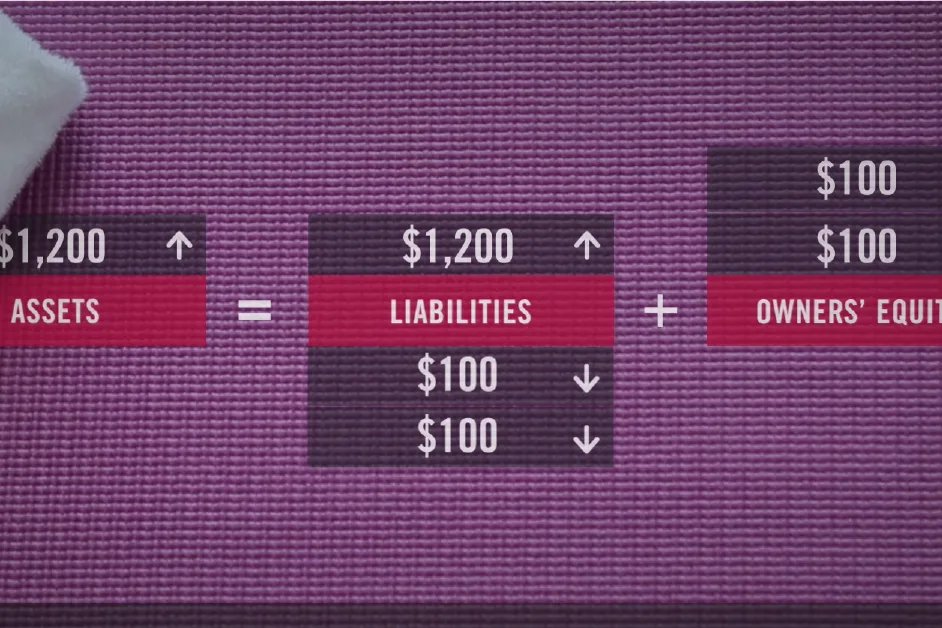
Historical Cost vs. Fair Value Accounting vs. Current Cost Accounting
Historical cost accounting isn’t the only approach to determining an asset’s recorded amount or value. Fair value accounting and current cost accounting offer different perspectives, each providing useful information depending on the circumstances.
Each approach seeks to answer a distinct question:
Historical cost accounting asks: “What did the asset cost when it was acquired?”
Fair value accounting asks: “What could the asset be sold for today?”
Current cost accounting asks: “What would it cost to replace this asset with an equivalent one today?”
“The downside of historical costs would be that it might result in less relevant information if the values have changed since the time the transaction took place,” Yu says in Financial Accounting.
Yu points to land, which tends to appreciate over time, as an example of this. The current market value of a company’s land might be significantly higher than the value recorded when it was acquired. Yet, under the historical cost principle, land typically isn’t adjusted upward just because its market value increased.
Fair value accounting and current cost accounting can provide more current information, though in different ways.
Fair Value Accounting
Fair value accounting measures an asset based on the price it could be sold for today. Unlike an asset’s historical cost, its fair value can fluctuate as market conditions change.
Certain financial assets, including some debt instruments and securities, are measured at fair value under GAAP. For assets that aren’t recorded at fair value, the metric can still provide useful information to stakeholders, such as investors and lenders.
Active, transparent markets can make it easier to determine fair value using observable prices. When market information is limited, such as for art or collectibles, you may need to rely on estimates, assumptions, and other valuation techniques to find an asset’s fair value.
Current Cost Accounting
Current cost accounting measures an asset based on what it would cost to purchase an equivalent asset in the current market. This can be useful information to a business, especially if it’s preparing a budget to replace an asset, but it isn’t a standard measurement basis for most assets under GAAP.
Although similar to fair value accounting, there are important differences. Fair value reflects what an item could be sold for, while current cost reflects what it would cost to acquire an equivalent asset. In some cases, those amounts may be similar; in others, they can differ significantly.
Consider a piece of industrial equipment owned by a manufacturer. The equipment could have a historical cost of $100,000, but a fair value of $80,000 due to its age, condition, and market demand. Meanwhile, an equivalent replacement could have a current cost of $120,000 due to inflationary effects on parts and labor. Each amount provides different information about the asset depending on how it’s being measured.
Example of the Historical Cost Principle in Action
For an example of how the historical cost principle can work in practice, consider this hypothetical scenario featuring Cardullo’s Gourmet Shoppe from Financial Accounting.
Cardullo’s is a specialty food retailer in the Boston area that sells locally produced and imported gourmet foods and beverages.
Imagine Cardullo’s orders a large shipment of Nutella, imported from Italy, to stock in its stores. It initially records the inventory based on its purchase price. Shortly after the purchase, damage to Nutella’s production line causes a shortage. As customers’ willingness to pay increases, Cardullo’s believes it can sell its inventory at a higher price than originally anticipated.
Despite the product's increased market value, Yu explains in Financial Accounting, “Cardullo’s will maintain costs with inventory at the cost that it initially transacted, because that’s the reliable, verifiable value of the inventory supported by an actual past transaction.”
Even when the market value of inventory increases and a company can realistically sell it at a higher price, it doesn’t simply increase the inventory’s recorded value on the balance sheet to reflect that appreciation.
Free Brochure
Core Business Essentials
Build fluency in the language of business and gain the confidence to make an immediate impact on your career and organization.
Why the Historical Cost Principle Matters to Businesses
Accurately preparing and analyzing financial statements requires understanding how assets and liabilities are recorded under GAAP. Historical cost provides a reliable, verifiable basis for recording many assets and helps stakeholders understand the information presented on a company’s balance sheet.
Yet, historical cost is just one accounting concept. Developing a broader accounting foundation can help you understand how business transactions affect the income statement, balance sheet, cash flow statement, and other critical reports—and use that information to assess a company’s financial position and performance. An online course like Financial Accounting can help you build those skills and apply them in your career.
For a more comprehensive understanding of business fundamentals, consider a multi-course credential program like Core Business Essentials, which combines Financial Accounting with Business Analytics, Business Strategy, workplace dynamics lessons, and a capstone project.
Are you interested in strengthening your financial understanding? Explore Financial Accounting—which can be taken individually or as part of our online Core Business Essentials credential program. To learn more about Core Business Essentials, download our free brochure today.