
Long-lived assets remain on a company’s balance sheet throughout their useful lives, or the amount of time they're expected to provide economic benefit to the business. For many assets, their recorded value decreases over time through depreciation or amortization, depending on the asset type.
What happens when a business no longer needs an asset or it reaches the end of its useful life? Whether it’s scrapped, sold, or otherwise retired, the asset must be removed from the balance sheet through a process known as asset disposal. Any resulting gain or loss must also be recognized on the income statement.
This guide explains asset disposal, the events that can trigger it, and how to accurately reflect it in financial statements. It also covers the journal entries used to account for asset disposal.
Featured Certificate Course
Financial Accounting
Learn how financial statements are built, interpreted, and used to assess business performance.
Start Anytime | 5 Modules | 8-9 Hours per Module | $1,949
What Are Assets in Accounting?
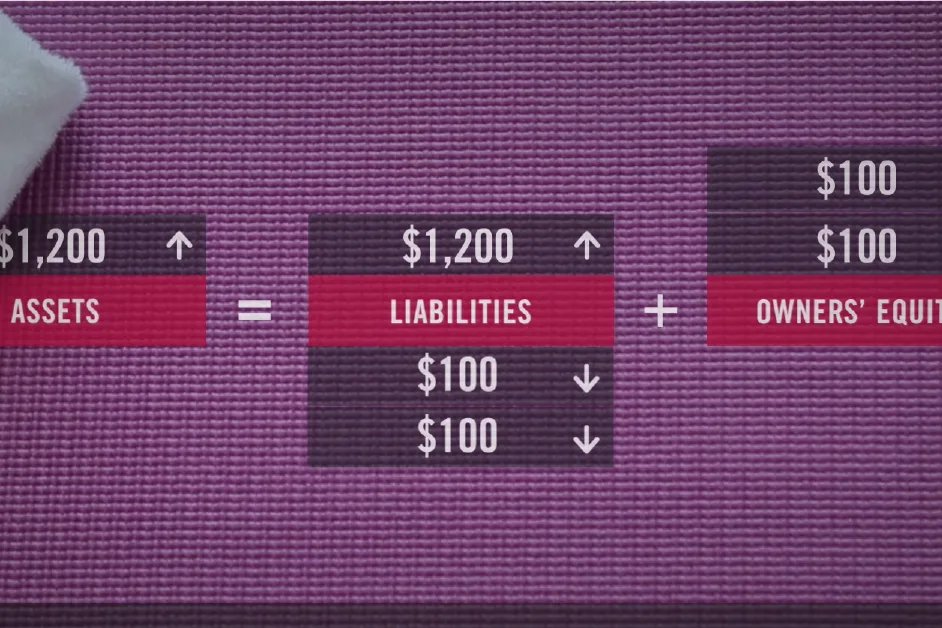
In accounting, an asset is a resource owned or controlled by a business that has measurable value and is expected to provide future economic benefits.
“The business or organization expects that its assets will produce benefits in the future,” says Harvard Business School Professor V.G. Narayanan in the online course Financial Accounting, which can be taken individually or as part of Core Business Essentials. “For example, a company should be able to sell its inventory to customers for cash, use its equipment to make products that customers will buy, or use its cash to maintain equipment or invest in new projects.”
Assets can be tangible or intangible:
Tangible assets: These have a physical form and include cash, equipment, vehicles, land, buildings, and inventory
Intangible assets: These lack physical form and include patents, trademarks, copyrights, and goodwill
Both types may appear on a company's balance sheet, although the accounting treatment of intangible assets depends in part on whether they were purchased or developed internally.
Assets can also be classified as current (short-term) or noncurrent (long-term), depending on when they’re expected to be used, sold, or converted into cash. Asset disposal accounting typically focuses on noncurrent assets, such as equipment, vehicles, and buildings.
What Is Asset Disposal?
Asset disposal is the formal process of removing a long-term asset from a company’s financial records, including its balance sheet. It’s also sometimes called derecognition because the asset is no longer recognized on the balance sheet.
This process is necessary when a business:
Sells an asset: A business sells an asset for cash. Depending on the sale price and its underlying book value, this may result in a gain or loss for the business.
Retires an asset: A business removes an asset, such as outdated or damaged equipment, from use when it's no longer needed or economically practical to operate.
Exchanges an asset: A business exchanges or trades in an asset, like a vehicle, when purchasing a replacement. In this case, the old asset typically acts as partial payment for its replacement.
Donates an asset: A business transfers ownership of an asset to a third party, such as a charity or nonprofit, without receiving payment.
Loses an asset to theft: An asset owned by the business is stolen.
Companies dispose of assets for various reasons, including when they’re outdated, damaged, or no longer needed. For example, if repairing damaged equipment would cost more than replacing it, a business may choose to dispose of the asset. They may also dispose of assets that have reached the end of their useful lives, although fully depreciated assets can remain in use.
Accounting for Asset Disposal
When a business disposes of an asset, it must remove the asset from the balance sheet, record any proceeds received from the transaction, and recognize any resulting gain or loss on the income statement.
The specific journal entry depends on the asset and how it’s disposed of, but the process generally involves the following steps:
1. Calculate the Asset’s Book Value
To accurately account for the disposal, you’ll need to calculate the asset’s book value. Also called its carrying value, this is how much the asset is currently worth on your company’s books, which may differ from its market value.
For a depreciable asset, calculate its net book value by subtracting accumulated depreciation from its original recorded cost. Update depreciation through the disposal date, making an adjusting journal entry, if needed, to record any additional depreciation.
2. Remove the Asset from the Balance Sheet
Next, you’ll need to remove the asset’s original cost from the balance sheet. As discussed in Financial Accounting, you’ll do this by making a credit entry to the appropriate asset account—for example, property, plant, and equipment (PP&E).
At the same time, you’ll need to remove any accumulated depreciation associated with the asset. You’ll do this by debiting the accumulated depreciation account. Together, these entries remove the asset’s original cost and accumulated depreciation from the balance sheet.
3. Record Any Proceeds from the Disposal
If the asset was sold, traded in, or otherwise exchanged for value, record what the business received from the transaction. For a cash sale, debit the cash account for the proceeds received. If the buyer hasn’t paid yet, you may instead record a receivable.
If the asset was scrapped or retired without generating proceeds, no corresponding cash or receivable entry is necessary.
Featured Multi-Course Program
Core Business Essentials
Build fluency in the language of business and gain the confidence to make an immediate impact on your career and organization.
Self-Paced | 17 Weeks | 5-8 Hours per Module | $2,799

4. Calculate and Record Any Gain or Loss
Next, determine whether the disposal resulted in a gain or loss, even if the business received no proceeds from the transaction. To do this, compare the proceeds from the transaction with the asset’s net book value.
If the proceeds exceed the asset’s net book value, the difference is recorded as a gain by crediting a gain-on-disposal account.
“A gain is similar to revenue,” Narayanan says in Financial Accounting. “It increases owner’s equity. The difference is that revenues are the result of a routine transaction. A gain, on the other hand, is a one-time event or adjustment.”
If the proceeds are less than the asset’s net book value, the difference is recorded as a loss by debiting a loss-on-disposal account. If the proceeds equal the asset’s book value, there’s no gain or loss to recognize.
“A loss is similar to an expense,” Narayanan explains in Financial Accounting. “It decreases stockholders’ equity.”
If the asset was retired without generating any proceeds, its remaining net book value would normally be recognized as a loss. If the asset had fully depreciated, however, it can be retired without generating a loss.
5. Complete and Verify the Journal Entry
The activities described above are typically recorded together in a single journal entry in the company’s general ledger. Before finalizing the entry, verify that total debits equal total credits. Ensure that the asset’s original cost, accumulated depreciation, disposal proceeds, and any gain or loss are recorded correctly.
6. Reflect the Disposal in the Relevant Financial Statements
Once you post the journal entry, it should be reflected in the company’s financial statements, either automatically or manually, depending on your accounting system. Relevant financial statements include:
Balance sheet: The asset’s original cost and any related accumulated depreciation are removed from the balance sheet. Cash or receivables will also increase if the business received or is owed proceeds from the disposal.
Income statement: Any gain or loss from the disposal is recognized on the income statement, increasing or decreasing net income. Depreciation expenses recorded through the disposal date also affect the income statement.
Cash flow statement: If the business receives cash proceeds from the sale of a long-lived asset, those proceeds are usually reported as investing cash inflows.
An Example of Asset Disposal in Accounting
Consider an example from Financial Accounting in which PepsiCo sells a delivery truck.
If PepsiCo originally purchased the truck for $70,000 and sells it for $60,000 in cash, it would need to:
Credit the “Property, Plant, and Equipment” account by the truck’s original purchase price ($70,000)
Remove the accumulated depreciation ($20,000) by debiting the “Accumulated Depreciation” account
Record the proceeds of the sale ($60,000) to the “Cash” account with a debit
Record the gain ($10,000) in the “Gain on Sale of Equipment” account with a credit
The truck's net book value was $50,000 ($70,000 original cost minus $20,000 in accumulated depreciation). Because PepsiCo sold it for $60,000, the company recognized a $10,000 gain. According to Financial Accounting, one potential reason is that the vehicle may have worn out or lost value more slowly than originally estimated.
The final journal entry would look like this:
Journal Entry: Sale of Equipment (January 1, 2027)
Debit: Accumulated Depreciation — $20,000
Debit: Cash — $60,000
Credit: Property, Plant, and Equipment (PP&E) — $70,000
Credit: Gain on Sale of Equipment — $10,000
Total Debits: $80,000
Total Credits: $80,000
Free Brochure
Core Business Essentials
Build fluency in the language of business and gain the confidence to make an immediate impact on your career and organization.
The Importance of Accounting for Disposed Assets
Failing to properly account for disposed assets—and any resulting proceeds, gains, or losses—can lead to inaccuracies in financial statements like your balance sheet and income statement. For business owners, entrepreneurs, and managers, understanding how to record these transactions is important for maintaining accurate financial records.
Accounting knowledge can benefit professionals across functions, even those who don't work directly with financial data. To gain that understanding, consider completing an online course like Financial Accounting, designed to teach professionals how to generate, understand, and use financial statements.
For a broader business education, consider completing Core Business Essentials, which combines Financial Accounting with courses on Business Strategy and Business Analytics.
Are you interested in strengthening your financial understanding? Explore Financial Accounting—which can be taken individually or as part of our online Core Business Essentials credential program. To learn more about Core Business Essentials, download our free brochure.