
Workplace disputes rarely arise because people disagree. Instead, it's when employees lack clarity—about what’s negotiable, who has authority, and how decisions are determined. Ambiguity clouds discernment, intensifies emotion, and turns manageable disagreements into costly conflicts.
Artificial intelligence (AI) is beginning to cut through that fog. “In recent years, artificial intelligence has started to do just that—helping surface information, clarify expectations, and even guide decision-making in real time,” says Harvard Business School Professor Michael Wheeler in the online course Negotiation Mastery.
AI-powered tools are transforming how organizations negotiate, mediate, and resolve conflicts. They uncover patterns and connections that could take human analysts weeks to untangle—delivering faster, deeper, and more precise insights.
Used thoughtfully, AI doesn’t replace negotiators. It sharpens them by reducing informational ambiguity so leaders can focus on what technology can’t replicate: judgment, trust-building, and fairness.
Leaders who combine AI’s analytical precision with human insight and clear accountability structures won’t just resolve disputes faster; they'll settle them in ways that endure. This guide explores how to partner with AI to strengthen dispute resolution outcomes.
Featured Course
Negotiation Mastery
Build negotiation skills to create value, influence outcomes, and navigate difficult conversations.
Start Anytime | 4 Modules | 8-10 Hours per Module | $1,949
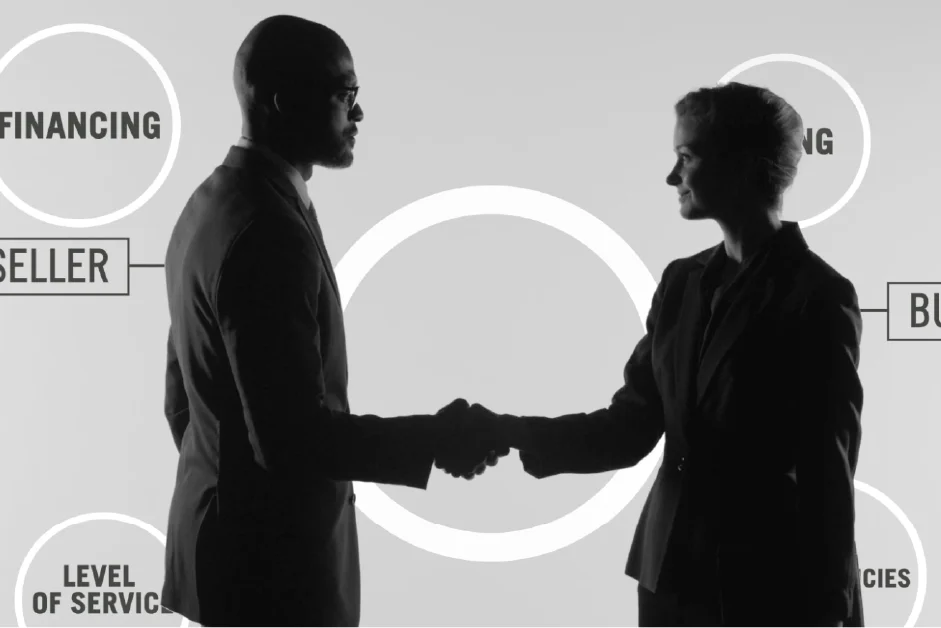
Best Practices for Partnering with AI During Conflict
Draw the Line Between AI and Human Relationships
Predictability creates trust in any negotiation process. Before introducing AI tools into a dispute, leaders must clearly define the technology’s role.
Colin Rule, a pioneer of online dispute resolution and the CEO of ODR.com and Mediate.com, offers a useful framework in Negotiation Mastery: technology acts as the fourth party in a negotiation.
Traditionally, disputes involve three parties: the two sides in conflict and a neutral third party, such as a mediator. The fourth party is the technology that supports the process. In its early forms, this digital participant handled administrative tasks like notifications or document routing.
As Rule explains in Negotiation Mastery, “As the fourth party has become more competent, it's able to take on more things that previously the third party had to handle.” This shift frees human mediators to focus on what only humans can do—listen, empathize, and guide parties through emotional concerns.
Even the most powerful algorithm, Rule stresses in Negotiation Mastery, “Can't guide a disputant through the psychological journey from conflict to resolution.” That path still requires human insight and emotional intelligence.
Setting these boundaries early clarifies where AI can support the dispute process and where human judgment remains vital.
Leverage AI in Preparation
Integrating these tools into dispute resolution begins long before sitting down at the table.
Jonathan Gratch, a research professor at the University of Southern California featured in Negotiation Mastery, emphasizes that most people underprepare for negotiations. AI can help fill that gap.
“So, if you're about to get into a negotiation, you can game it out, talk to an AI," Gratch says in Negotiation Mastery. "What are some of the issues? Maybe, what are some of the ways the person might respond, and how might I respond back? Help it, use it to ask your query more about what you yourself might want out of this negotiation, and make it more concrete."
Before entering a difficult dispute, AI systems can help negotiators:
Research comparable cases and precedents
Model potential settlement scenarios
Stress-test arguments and counterarguments
Clarify their BATNA (Best Alternative to a Negotiated Agreement)
Identify what they want from the negotiation
Used this way, AI becomes a rehearsal partner. Rather than scripting every word in advance, negotiators can practice responses, explore objections, and test framing strategies—arriving at high-stakes conversations with greater clarity and confidence.
Real-world businesses are already applying this approach at scale. University of Arkansas Professor Remko Van Hoek, featured in Negotiation Mastery, reflects on Walmart's use of chatbots in procurement negotiations.
“One of the key benefits for Walmart is that the bot can run a lot more negotiations in a very limited amount of time simultaneously than a buyer can,” Van Hoek says in Negotiation Mastery.
The technology expands preparation and capacity, while humans retain control over strategy and guardrails. The lesson translates directly to dispute resolution: more preparation yields better outcomes, without sacrificing human oversight.
View AI as an Assistant
During a dispute, AI should play a supportive role rather than being the center of the conversation.
In Negotiation Mastery, Rule describes it as “a very capable and eager assistant who's there to help you make decisions and navigate strategy junctures.” Technology can generate ideas, surface options, and provide real-time feedback, while humans retain responsibility for decision-making and problem-solving.
A strong example appears in Rule’s work designing dispute resolution systems for the online marketplace eBay. The goal was never to automate human evaluation, but to structure the resolution process so users could navigate disputes more efficiently and fairly. Technology identified issues, guided parties through structured steps, and escalated only the most complex cases to human review. In this way, the system reduced uncertainty about what to do next while keeping authority in human hands.
“I think humans are going to remain at the center of negotiations and mediation,” Rule emphasizes in Negotiation Mastery. Rather than generating every draft, argument, or proposal manually, AI can serve as a collaborative partner—helping refine ideas and strengthen positions.
Improve Communication and Reduce Emotional Escalation
Adopting AI often requires adjusting established habits. Like any organizational shift, new workflows can initially feel like barriers.
Yet, as Rule notes in Negotiation Mastery, people often negotiate more effectively when technology creates distance. Looking at the eBay example featured in the course, sellers and buyers using the platform would engage in asynchronous communication to come to a decision.
This became a breakthrough in the dispute’s resolution—using time as a buffer to improve communication.
“They actually have time to reflect, strategize, and maybe get a bit of cooling distance in the interaction, and that was built into the way eBay worked,” Rule says in Negotiation Mastery.
This cooling distance reduced bias, minimized emotional flare-ups, and helped people feel less exposed.
Implementing AI in dispute resolution can:
Flag emotionally charged language
Suggest reframing
Encourage pauses
Summarize interests neutrally
AI doesn’t remove emotion from negotiation—it helps people manage it in a more deliberate, controlled, and psychologically safe way.
Normalize the Fourth Party at the Table
As AI becomes more embedded in professional life, it will no longer sit in the background.
“I think what we're going to see over time is the parties themselves are going to welcome the fourth party sitting at the table,” Rule says in Negotiation Mastery.
This fourth party doesn't need to be a robot in a chair. It could be a voice assistant, a language model, or a system quietly analyzing comparable cases in real time.
Parties might ask: What's a fair resolution in similar cases? What does the data suggest the likely Zone of Possible Agreement (ZOPA) is?
When embraced thoughtfully, AI expands the field of options. Humans evaluate, negotiate, and decide. The two roles are complementary—and together, they're more effective than either working alone.
Adjust Your Practice to Keep Up
A common fear is that AI will strip negotiation of its humanity—automating judgment or reducing complex conflicts to data points. That concern, while understandable, misreads what AI is doing.
“It’s not about erasing your humanity,” Rule challenges in Negotiation Mastery. “We don’t become automatons when we use technology to communicate with each other and resolve disputes.”
Integrating AI into your day-to-day can relieve administrative burden, speed up workflows, and allow leaders to focus on the human core of conflict. The goal isn't to replace human practice; it's to sharpen it.
Keeping pace requires commitment. As Van Hoek emphasizes in Negotiation Mastery, "It's going to require all of us to really lean in on lifelong learning and be open to new technologies and innovations." The alternative, he warns, is falling behind those who embrace innovation and adapt.
Gratch agrees, noting in Negotiation Mastery, “I think there really is a potential for AI to completely revolutionize the way we engage in the process of negotiation, from the preparation to teach people, to coach them during the negotiation, to do after-action review, to monitor and manage adherence. Tools are being developed to explore all those problems.”
Partnering with AI during conflict can accelerate creative problem-solving, learning, and broaden the range of possibilities negotiators can explore.
Free E-Book
How to Become a More Effective Leader
Explore the difference between leadership and management, the qualities and skills that characterize an effective leader, and how you can unleash the potential in yourself and others.
Human-Centered Resolution in the Age of AI
AI is reshaping the landscape of negotiation and dispute resolution—not by replacing human judgment, but by strengthening the structure around it. When leaders use AI to reduce ambiguity, prepare rigorously, and communicate more thoughtfully, they create the conditions for faster decisions, fairer outcomes, and more resilient stakeholder relationships.
Ready to strengthen your negotiation capabilities and learn how to partner with AI? Explore Negotiation Mastery—one of our leadership and management and entrepreneurship and innovation courses—and download our leadership and management e-book to build the skills required to lead in modern business environments.